
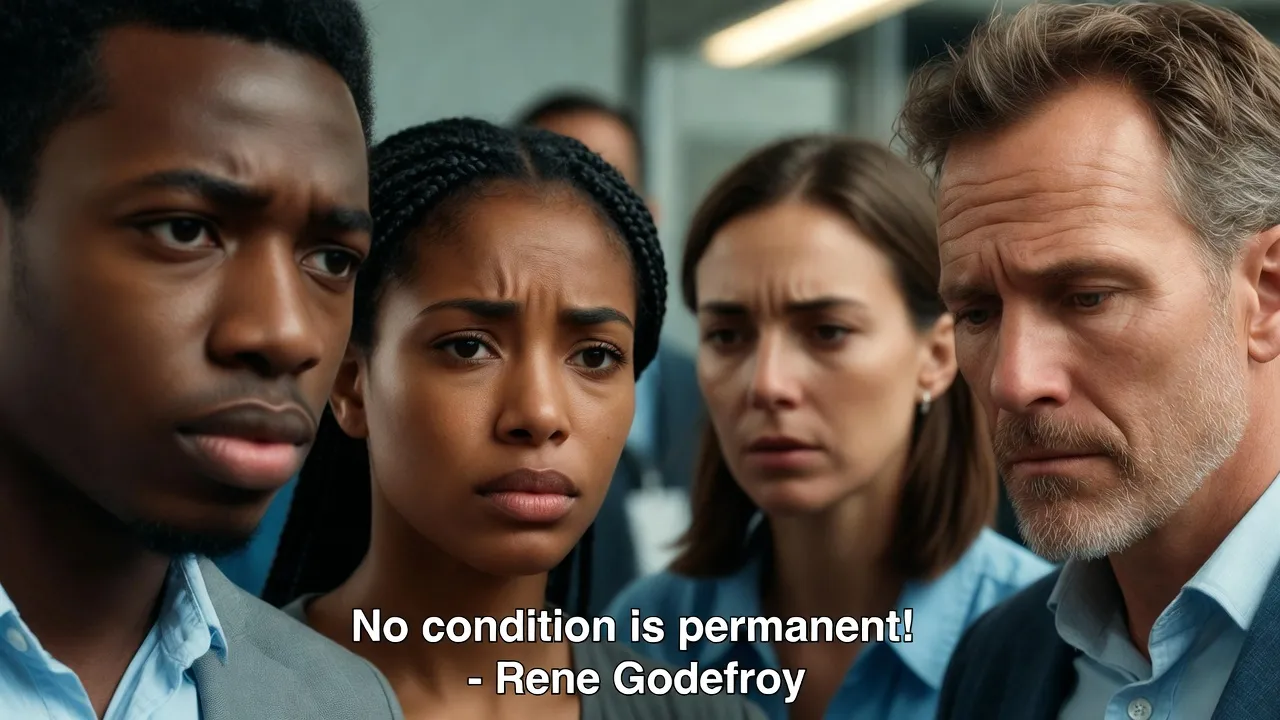
You got promoted because you were good. You worked hard. You delivered. And now you are sitting in a role where the ground keeps shifting and your team is looking at you like you have the map. But you do not have the map. Nobody gave you the map. And every morning you walk in and try to look like you do.
That is exhausting. Am I right?
Here is the part nobody warns you about. Your team is not just watching what you do. They are watching what you do not do. Every time you go quiet, they fill the silence with worst-case scenarios. Every time you delay a decision, they decide you do not believe in the road ahead.
Every time you soften the truth to protect them, they feel it and trust you a little less. You are trying to hold everything together and they are slowly losing confidence in the person they need most right now.
And the hardest part? You care. That is what makes this so brutal. A leader who does not care walks away. You have not walked away. You are here, searching for answers, which means the weight of your people is sitting right on top of you. You feel responsible for every single one of them. Their jobs. Their families. Their future. That is not a small thing to carry.
I know that feeling from the inside out. Not from a book. Not from a case study. I came to America at 21 with $5, two shirts, and zero English. I washed cars in a Miami parking lot. I worked as a doorman for 14 years. Uncertainty was not a leadership challenge for me. It was my life.
And after two decades of standing in front of teams at Coca-Cola, AT&T, Aflac, and the U.S. Army, I have learned exactly what separates the leaders who hold their teams together from the ones who lose them during the hard seasons.
Here are the three moves that make the difference.
The leaders who move their teams through uncertainty are not the ones who had all the answers. They are the ones who refused to freeze.
1-Stop Fighting What You Cannot Change
Here is the first mistake most leaders make when change hits. They fight it. They argue with the decision that came from headquarters. They stall. They spend energy being angry at market conditions, technology shifts, budget cuts, things they never had control over to begin with.
I understand. Believe me, I do.
When I landed in Miami with no English and $5, I could have spent every ounce of energy being angry about what I did not have. The language. The connections. The roadmap. But being angry at those things was not going to change them. And here is what I learned fast in that parking lot. The moment I stopped fighting what I could not control, I had energy left over for what I could.
That is the shift. And it is available to you right now.
It was never really about washing cars. It was about learning that your conditions do not determine your direction. You do. The parking lot was not my destination. It was my starting point. And I chose to treat it that way.
Here is how to make this move with your team. Pull everyone together and make two lists on a whiteboard. What is in our control. What is not. Then say this out loud: “We are putting one hundred percent of our energy into column one.” Watch what happens to the room. The tension does not disappear. But it finds a direction. And a team with direction is a team that can move.
No condition is permanent. But fighting the condition keeps you stuck in it.
No condition is permanent. But fighting the condition keeps you stuck in it.
According to MIT Sloan Management Review, leaders who focus on what they can influence during uncertainty consistently outperform those who fixate on what they cannot. That lines up with everything I have seen on stages and in conference rooms across this country. When you stop fighting the wave and start steering the boat, everything changes.
2-Tell Your Team the Truth Before They Stop Trusting You
Here is where most leaders lose their team during change. Not in the crisis itself. In the communication before the crisis fully lands.
They soften the news. They wait until they have “all the information.” They say everything is fine when the team can already feel that it is not. They think they are protecting people. They are not. They are teaching their team that when things get hard, the boss goes quiet. And once a team learns that lesson, it is very hard to undo.
I watched this up close as a doorman.
The best managers I worked for told us the truth. Business is slow. We might have to cut hours. Here is what we are doing about it. We trusted those people. Completely. Not because they had good news. Because they respected us enough to be straight with us.
The managers who said everything is fine while we watched the lobby stay empty? We stopped believing a word they said. By the time things got worse, they had no credibility left to spend.
Your team is not fragile. They can handle a hard truth. What they cannot handle is being treated like they cannot handle it.
Here is a framework I give leaders all over the country. Three sentences. Use it in your next team meeting. “Here is what we know. Here is what we are still figuring out. Here is what we are doing right now.” That is it. It does not pretend to have all the answers. But it shows you are not frozen. And it shows you respect your people enough to be honest with them.
Honesty builds trust. Trust is what holds a team together when the ground is shaking. You cannot lead through change and uncertainty without it. Do not wait until you have all the answers to start talking. Start talking now.
Your team is not fragile. They can handle a hard truth. What they cannot handle is being treated like they cannot handle it.
If you want to go deeper on building trust with your team during hard seasons, read this: how empathy makes you a stronger leader when your team needs you most.
3-Move Anyway Even When You Are Afraid
Let me tell you about the day I gave my first paid speech.
My English was still broken. My hands were shaking. I stood at the front of the room thinking, “These people are going to ask for their money back.” Every part of me wanted to disappear.
I moved anyway.
Not because I was not afraid. I was terrified. But I had made a decision that fear was not going to pick my direction anymore. And that decision changed everything that came after it.
That is the move your team needs to see from you right now. They are not looking for Superman or superwoman. They are not waiting for you to have it all figured out. They are watching to see if you will keep leading when you do not.
Here is what steady leadership looks like in practice during uncertainty. Name the hard thing out loud. “This is a difficult season. I know it. You know it. Let’s not pretend otherwise.” Then commit to the next step. “And we are moving forward anyway. Here is what we are doing this week.” Then celebrate the distance traveled. “Look at how far we have come. Two months ago this felt impossible. Look at us now.”
That sequence is more powerful than any pep talk. Because it is honest. And your team knows honest when they hear it.
Think about it. When has anything worth doing come with a guarantee? You took your current job without knowing how it would go. You made hard calls without a perfect outcome in sight. You moved forward anyway. Because you understood that the only way through is through.
Your resilience gives your team permission to be resilient. Do not underestimate that. When they see you name the fear and move anyway, they learn that they can do the same. That is one of the most powerful things a leader can model. And it costs nothing but courage.
Challenges do not define us. They refine us.
Frequently Asked Questions
How do I lead my team through change without losing their trust?
The fastest way to keep trust during change is honest, frequent communication. Do not wait until you have all the answers. Use this framework at your next team meeting: “Here is what we know. Here is what we are still figuring out. Here is what we are doing right now.” A team that hears the truth from you, even when the truth is uncomfortable, will follow you through almost anything.
What should a leader say to their team during uncertainty?
Name the reality, commit to the direction, and celebrate progress. Say the hard thing out loud. “This is a difficult season and I know it.” Then give your team a next step, not a speech. People do not need you to have all the answers. They need to see you leading anyway. Short, honest, and specific beats long and polished every time.
How do I stop my team from freezing when change hits?
Motion creates clarity. When everything feels uncertain, give your team one small thing they can control and do today. Break the big scary change into a single next step. Momentum beats paralysis every time. A team that is moving, even slowly, is a team that believes things can get better. A team standing still is a team losing hope.
How do I stay calm as a leader when I am scared?
You do not have to feel calm. You have to move anyway. Keynote speaker Rene Godefroy, who built a speaking career from nothing after arriving in America with $5 and no English, says the best leaders he has ever seen were not the fearless ones. They were the honest ones who kept showing up. Your team does not need you to be fearless. They need you to move even when you are afraid.
What is the biggest mistake leaders make during change and uncertainty?
Fighting what they cannot control. Most leaders burn enormous energy arguing with the conditions instead of directing their team through them. The moment you stop fighting what you cannot change, you have energy left over for what you can. Make two lists with your team: what is in your control and what is not. Then put one hundred percent of your focus on column one.
How do I find a keynote speaker on leading through change and uncertainty?
Look for someone who has actually lived through extreme uncertainty, not just studied it. Rene Godefroy came to America at 21 with $5 and no English, washed cars, worked as a doorman for 14 years, and built a speaking career from the ground up. He has spoken to leadership teams at Coca-Cola, AT&T, Aflac, and the U.S. Army on resilience and leading through change. If your team needs this message, reach out at renegodefroy.com/in-touch.
If your team is in the middle of a hard season right now and needs a message that will move them forward, I would love to be in the room with them. This is not something I read about. This is something I lived. And I have spent decades helping leaders and teams find their footing when the ground shifts. Send me a note here: renegodefroy.com/in-touch
Let me conclude by saying this. The caterpillar does not struggle inside the cocoon. It transforms. What looks like the hardest season of your leadership may be exactly what is making you into the leader your team needs you to become. The uncertainty you are carrying right now is not a sign that something is wrong. It is a sign that something important is happening.
There you have it.
Much success to you! Press on!
0 Comments