
The Optimist Creed By Christian Larson From Optimist Intl
What Is The Optimist Creed?
The Optimist Creed is a set of promises you make to yourself. Twelve simple lines that tell you how to think, how to speak, and how to show up in the world.
It was written over 100 years ago. And yet it still works today. Why? Because the struggles we face have not changed. Fear. Worry. Doubt. The creed addresses all of it.
Optimism is not about pretending life is easy. It is about choosing how you respond when life gets hard.
The Full Text Of The Optimist Creed
Promise Yourself:
To be so strong that nothing can disturb your peace of mind.
To talk health, happiness, and prosperity to every person you meet.
To make all your friends feel that there is something worthwhile in them.
To look at the sunny side of everything and make your optimism come true.
To think only of the best, to work only for the best, and to expect only the best.
To be just as enthusiastic about the success of others as you are about your own.
To forget the mistakes of the past and press on to the greater achievements of the future.
To wear a cheerful countenance at all times and give every living creature you meet a smile.
To give so much time to the improvement of yourself that you have no time to criticize others.
To be too large for worry, too noble for anger, too strong for fear, and too happy to permit the presence of trouble.
To think well of yourself and to proclaim this fact to the world, not in loud words, but in great deeds.
To live in the faith that the whole world is on your side, so long as you are true to the best that is in you.
Who Wrote The Optimist Creed And Why
Who Was Christian D. Larson
Christian D. Larson was born in Iowa in 1874 to Norwegian immigrant parents. He started out studying for the ministry but changed course. He became a writer and one of the pioneers of positive thinking in America.
He wrote over 40 books on the power of the mind. His core belief is that every person has dormant abilities inside them. With the right mindset, those abilities can be unlocked.
Coincidently, I believe the same thing. I believe that No condition is permanent.
Why The Creed Was Created
Larson first published the creed in 1912 in his book "Your Forces and How to Use Them." He originally called it "Promise Yourself."
In 1922, Optimist International adopted it as their official creed. Today, clubs around the world recite it at their meetings.
Why has it lasted so long?
Because it is not theory. It is actionable. Each line tells you exactly what to do.
How The Optimist Creed Changed My Life
I was born in a remote Haitian village where most did not believe I would survive. Poverty, disease, and hopelessness were all I knew. When I came to America, I had no money, no English, and no connections.
Everything changed the day I discovered The Optimist Creed.
It was not just words to me. It was a declaration. A new way to live. I memorized it. Recited it daily. And slowly, it began to reshape how I thought and acted.
I used to complain, blame, and live in fear. The creed taught me to speak life into my situation. I stopped focusing on lack. I started focusing on possibility.
Here is why it works:
The subconscious mind does not know the difference between imagination and reality. What you feed it repeatedly, it begins to believe.
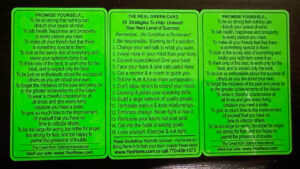
The Green Card Story
When I became a U.S. citizen, they took my green card. I asked to keep it as a keepsake. They said no.
So I made my own. They are plastic. And they are actually green. One side has a summary of my keynote. The other side has The Optimist Creed. I have given away thousands of those cards.
I used to close every speech with the creed. It became part of me.
Discovering Optimist International
Through the creed, I discovered Optimist International clubs across the country. I was surprised to find successful professionals making time to uplift others. Their mission is to spread optimism around the world.
When I became a motivational speaker, I gave back. I spoke at those clubs for free. It was my way of honoring what they gave me.
The Core Message Of The Optimist Creed
The creed is built on three pillars. Think better. Speak better. Act better.
Think Better
"To think only of the best, to work only for the best, and to expect only the best."
"To be too large for worry, too noble for anger, too strong for fear."
Your thoughts create your reality. When you expect the worst, you prepare for the worst. When you expect the best, you position yourself to receive it.
This is not wishful thinking. It is mental discipline.
Speak Better
"To talk health, happiness, and prosperity to every person you meet."
"To make all your friends feel that there is something worthwhile in them."
Your words have power. They can lift people up or tear them down. Think about the last conversation you had. Did you complain? Or did you encourage?
Act Better
"To give so much time to the improvement of yourself that you have no time to criticize others."
"To proclaim this fact to the world, not in loud words, but in great deeds."
Talk is cheap. The creed calls you to back up your optimism with action. Work on yourself. Show up for others. Let your life be the proof.
How To Use The Optimist Creed In Daily Life
The creed is not meant to sit on a wall. It is meant to be lived. Here are four ways to put it into practice.
Morning Ritual
Read the creed first thing in the morning. Before you grab your smart phone. Before the news. Let these words be the first thing that enters your mind.
Stress Reset Tool
When you feel overwhelmed, pull out the creed. Find the line that speaks to your situation.
Worried? "To be too large for worry."
Angry? "To be too noble for anger."
Stuck in the past? "To forget the mistakes of the past and press on."
Use it like a reset button for your mind.
Leadership And Work
Leaders set the tone. The creed says to "talk health, happiness, and prosperity to every person you meet." Try this at your next meeting. Watch what happens.
Parenting And Family
Kids learn more from what they see than what they hear. Tell your kids what you see in them. Be specific. Watch them rise to meet your words.
Why The Optimist Creed Still Works Today
We live in a noisy world. Bad news comes at us 24 hours a day. Fear sells. As long as you are afraid, you can be controlled or manipulated.
The creed cuts through all of that. It reminds you that you have a choice. You can let the noise control you. Or you can control how you respond to it.
Common Misunderstandings About Optimism
Optimism Is Not Naivety
Some people think optimism means pretending everything is fine. Not true.
Look at the words: "To be so strong that nothing can disturb your peace of mind." That is not denial. That is resilience.
Optimism Is A Skill
You are not born an optimist or a pessimist. You become one through practice.
The creed gives you a daily workout for that muscle.
Printable And Shareable Versions
Print it and frame it for your office. Save it as your phone lock screen.
Share it with a friend who needs encouragement. Click here to download it.
Final Thoughts: Live The Creed
Reading the creed is not enough. You have to live it.
Pick one line today. Just one. Practice it until it becomes part of who you are.
Promise yourself. Then keep the promise. Challenges do not define you. They refine you.
Frequently Asked Questions (FAQ)
Q. What is the Creed really about?
The Creed is more than a nice quote. It is a list of promises that train your mind to focus on strength, hope, and possibility instead of fear and doubt.
Q. What is the Optimist Creed in simple words?
Christian D. Larson wrote the Creed in the early 1900s. He created it to help people choose a positive, powerful way of thinking in daily life.
Q. Is the Optimist Creed religious?
No. The creed is not tied to any religion. People of all faiths and backgrounds use it.
Q. Who wrote the Creed and why was it created?
It is a list of 12 promises about how to think, speak, and act. Each promise helps you stay positive and strong no matter what life throws at you.
Q. Does repeating the Creed actually change your mindset?
Yes. When you repeat the Creed, you give your mind new instructions. Over time, your subconscious begins to accept those ideas as truth. That is how your mindset starts to shift.
Q. How long does it take to see results from using the Creed?
It is different for everyone. Some people feel better in a few days. For others, it takes weeks. The key is daily practice. Small changes add up.
Q. How often should I read it?
Daily is best. Many people read it in the morning to set the tone for their day.
Q. Can the Creed help with stress, fear, or anxiety?
Yes. The Creed guides you to focus on courage, peace, and self control. This calms your thoughts and gives you strength when life feels heavy.
Q. Do I have to believe every line for it to work?
No. You can start even if you are not sure. Say the words with an open heart. Your belief often grows as you see small changes in how you think and feel.
Q. What is the best way to memorize it?
Start with one line at a time. Read it daily for a week before adding the next line. Within 12 weeks, you will know the whole creed by heart.
Q7. Should I memorize the whole Creed or start with one promise?
You can start with one line that speaks to you. Repeat it every day. When it feels natural, add another line. Step by step, you can memorize the whole Creed.