
The night before I was set to deliver a keynote for the Indiana Bankers Association, I walked into that ballroom alone. Man, I wish I had not done that. The room was massive. Round tables everywhere, draped in white linen. A big stage. Spotlights. A podium that looked...
The Theory of Anticipation: How to Lead, Serve, and Win In Any Economy
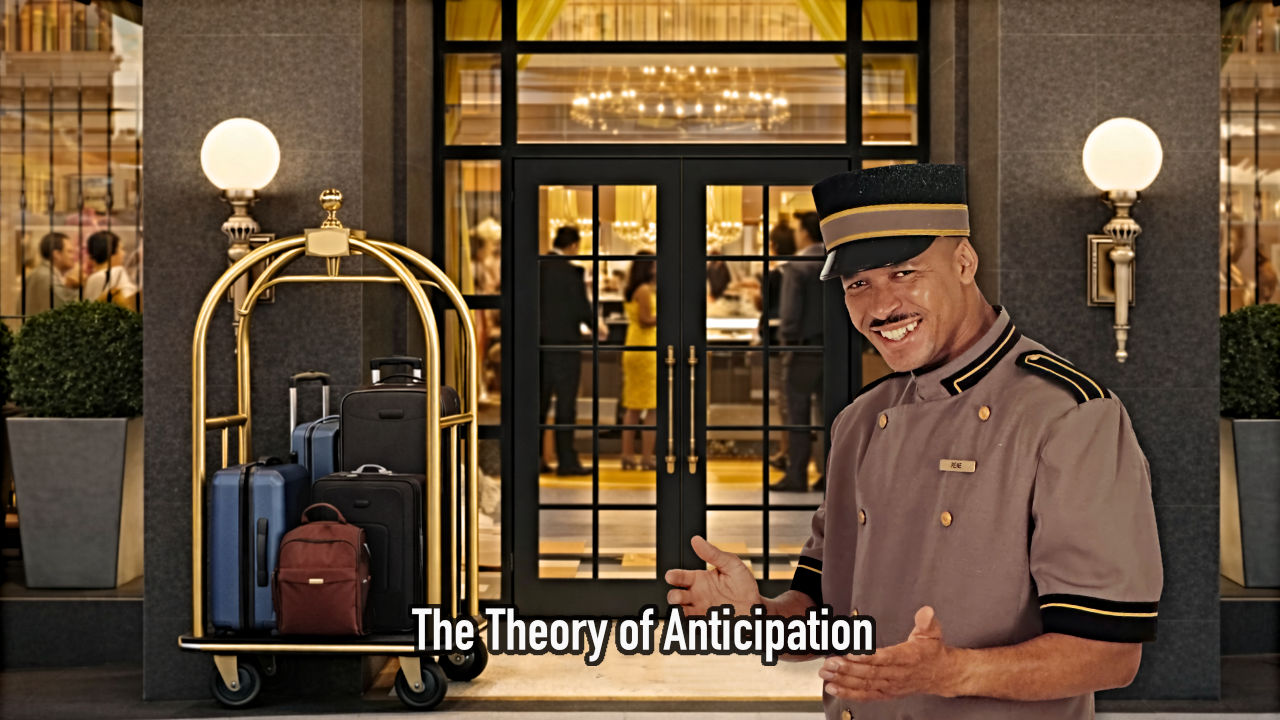
Most people spend their lives reacting. That's because they have not mastered "The Theory of Anticipation" yet.
They wait for the customer to complain before they fix the service. They wait for the employee to quit before they ask what is wrong.
Even in their own homes, they wait for their spouse to get frustrated before they offer to help.
The answer is NO!
Reaction is the path to mediocrity. Whether you are leading a Fortune 500 company or trying to be a better husband or wife, the secret to elite performance is the same. I learned this years ago while working as a doorman at a luxury hotel in Atlanta. I didn't have a title, but I had a system.
I call it The Theory of Anticipation.
More Than Just Opening Doors
My job description was simple: open doors, smile, and carry bags. Most people in that role trade time for a paycheck. But I wanted to be indispensable. I wanted to be elite.
One afternoon, a couple pulled up to the curb. They were on vacation, but the long drive had stolen their joy. They were exhausted. I didn't know their names or their titles. I just saw two tired human beings.
Most doormen would have simply opened the car door. I went to work on their "invisible" needs.
- I solved the "Next" problem: I discovered they loved seafood. I didn't give them a map; I prepared a hand-picked list of the best local seafood spots.
- I protected their peace: I suggested a relaxation massage spot. I found out their room preferences—the specific view and floor—and coordinated it with the front desk before they even checked in.
- I leveraged my network: I called the restaurant owner ahead of time. I told him to give my guests the "Special Treatment." I even arranged for the hotel driver to take them there so they wouldn't have to navigate a new city.
A week later, a sales executive named Becky Harmon came to me with tears in her eyes. The guests had sent a "mind-blowing" comment card praising the service. It was only then that I learned the guest was a prominent Judge.
Becky secured a client for life. The hotel earned a glowing reputation. And I proved that anticipation is the highest form of service.
Why The Theory of Anticipation is Your Most Powerful Asset
Years after leaving that hotel, I still teach this theory to sales teams, customer service departments, and founders. It works because it is a universal law of human nature.
For Sales Teams: Stop pushing products. Start anticipating the client’s problems before your pitch. When you show a client you understand their future, the sale becomes a formality.
For Leaders and Founders: Don’t wait for market demand to shift. Anticipate the desires of your team and your customers. Great leaders don't just solve problems; they prevent them.
For Relationships: This theory makes better husbands and wives. In a marriage, anticipation is the highest form of "I love you." When you wash the dishes or provide a word of encouragement before you are asked, you are protecting your partner's peace. You move from being roommates to being soulmates.
The 3 Laws of Anticipation
If you want to move from average to elite, you must master these three pillars:
1. Observation Over Inquiry
Stop asking "How can I help you?" and start observing "What do they need next?" Your eyes are your most powerful tools. Read the subtle cues that others miss.
2. The Invisible Gap
Greatness lives in the space between the thought and the request. If a customer or a spouse has to ask, you have already lost the opportunity to "wow" them. Fill the gap and you become indispensable.
3. The Emotional Echo
A transaction is a transfer of money. A transformation is a transfer of feeling. When you anticipate a need, you create an emotional echo of trust and care that lasts long after the deal is closed.
Stop Waiting, Start Winning
The world will tell you to follow the script and wait for instructions. That's not good advice at all.
You have the staff in your hand. You have the power to see the future of your service, your sales, and your leadership.
Embrace The Theory of Anticipation and transform every interaction into an opportunity to win before a single word is spoken.
No condition is permanent. Not even a reactive culture.
Questions and Answers About The Theory of Anticipation
Q: What is The Theory of Anticipation?
A: The Theory of Anticipation is a proprietary framework developed by Rene Godefroy. It focuses on proactively identifying and meeting the needs of clients, customers, or partners before they are explicitly voiced. It transitions an individual or organization from reactive service to proactive leadership.
Q: How does The Theory of Anticipation apply to business leadership?
A: In business, it involves "scouting" the road ahead for your team and customers. By removing friction and solving potential problems before they arise, leaders increase efficiency, boost morale, and create "clients for life."
Q: Can this theory improve personal relationships?
A: Yes. In relationships, anticipation is a form of deep empathy. By observing a partner's non-verbal cues and meeting their needs without being asked, you build a foundation of trust and emotional safety.
Q: What are the primary benefits for sales teams?
A: Sales teams who use the Theory of Anticipation move away from "pitching" and toward "consulting." They become solution architects who provide value to the client before the transaction even takes place, leading to higher closing rates and better referrals.
Q: What are the "3 Laws" of this theory?
A: 1. Observation Over Inquiry (watch for cues). 2. The Invisible Gap (act before the request). 3. The Emotional Echo (create a lasting feeling of being valued).
Q: How does The Theory of Anticipation improve customer retention? A: Customer retention is built on trust and the feeling of being valued. By using The Theory of Anticipation to solve problems before a customer identifies them, you create a "wow" factor that moves the relationship beyond a price-based transaction. This proactive care makes it difficult for customers to switch to a competitor, as they have grown accustomed to a level of service that feels personalized and intuitive.
Q: Can The Theory of Anticipation be taught to remote or digital teams? A: Yes. While the theory was born in a physical hotel lobby, its principles apply to digital environments. For remote teams, anticipation means identifying potential project bottlenecks before they occur.
It also means providing updates to clients before they ask for them, and noticing subtle shifts in team communication that might indicate burnout or confusion. It is about being "virtually proactive."
Q: What is the ROI (Return on Investment) of implementing The Theory of Anticipation in a business? A: The ROI of anticipation is seen in three specific areas:
- Lower Customer Acquisition Costs: High-impact service leads to organic word-of-mouth and referrals.
- Increased Employee Engagement: Employees with the agency to "anticipate" feel more like owners and less like "order takers."
- Higher Profit Margins: Premium service allows for premium pricing. When you provide an experience that feels "mind-blowing," customers stop focusing on the cost and start focusing on the value.
RENE GODEFROY
Rene Godefroy is an award-winning keynote speaker who has delivered over 2,000 presentations for organizations like Coca-Cola, AT&T, Aflac, and the US Army. He immigrated to the US from Haiti at 21 with five dollars and built a career helping leaders turn adversity into opportunity.


0 Comments