
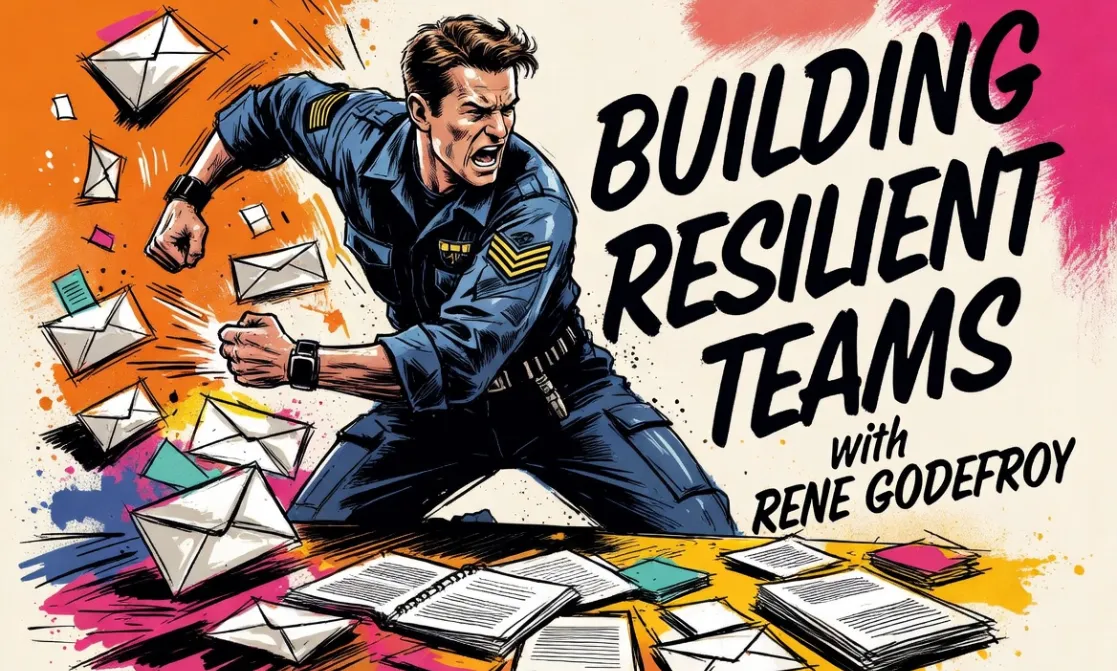
A Guide For Building Resilient Teams In The Workplace
If you are serious about building a resilient team that stays strong under pressure, adapts to change, and keeps morale high even when things get tough, this article is for you.
You are about to discover the real secret to building a resilient team. It is not about pushing people harder to build strength. It is about inspiring them keep pressing on during tough times. That’s the leader’s job.
The Village That Taught Me About Resilience
I grew up in a small village in Haiti with no electricity, no running water, and no toys. Life was simple but hard. When storms hit, we could hear the wind howling through our huts. The rain poured so heavy that it sounded like drums on the tin roofs.
But no one faced the storm alone. We would gather in one hut, hold hands, and sing songs until the wind passed. The songs reminded us that even in the darkest nights, we had each other. That experience taught me something powerful. Resilience is not about being tough. It is about staying connected.
We survived not because we were the strongest but because we were united. That is the same truth every leader must remember today about building a resilient team.
Why Learning to Build Resilient Teams Matters
In today’s workplace, many teams are struggling. People are stressed, burned out, and mentally drained. The constant pressure to perform, meet goals, and adapt to change has left employees feeling isolated and unseen.
Many leaders respond by telling people to work harder or “stay positive.” But that only makes things worse. People are not breaking down because of work itself. They are breaking down because they feel alone in their work.
A resilient team is not one that never struggles. It is one that struggles together and supports one another through it. The reality is, the secret to building a resilient team is creating safety, not pressure.
The Hidden Cost of Ignoring This Truth
When leaders ignore the emotional side of teamwork, they create an invisible gap. Team members stop trusting each other. They stop speaking up. Innovation fades, and performance eventually drops.
The real danger is not burnout alone. It is the quiet quitting, the lost creativity, and the feeling that “no one cares.” When people lose connection, they lose commitment.
The Mindset Shift Every Leader Needs
True resilience is not about bouncing back alone. It is about bouncing back together. The best leaders are not the ones who hide behind toughness. They are the ones who show empathy, stay calm, and create an environment of trust.
Being open and honest does not make you weak. It makes you relatable. And when your team sees you handle pressure with calm confidence, they learn to do the same.
4 Essential Steps to Building a Resilient Team That Thrives Under Pressure
1. Normalize struggle
Let your team know that challenges are a natural part of growth. Many leaders try to hide hard moments, but this only makes the team feel alone in their stress. When you bring struggles into the open, you remove the shame and fear around them.
Start your meetings with a simple check in. Ask, “What challenge are you facing this week?” Keep the tone calm and caring. Give each person a moment to speak. They do not need to share every detail. A short, honest answer is enough.
As people talk, something powerful happens. They hear each other. They realize they are not the only ones under pressure. This builds trust. It builds connection. It opens the door for support and teamwork.
When struggle becomes normal, people stop hiding their problems. They start asking for help sooner. They feel safer. They feel valued. They learn from each other’s experiences.
This simple practice builds a resilient team. It helps everyone face adversity with courage and confidence.
2. Celebrate small wins
Do not wait for big victories. Celebrate the small wins. Every step forward matters. When you recognize these moments, you help your team feel seen. You remind them that progress is happening right now, even if the finish line feels far away.
Small wins are seeds. When you water them with praise, they grow into confidence. Your team begins to believe that their daily effort makes a real difference. They feel proud of the little tasks they complete. They feel motivated to keep going. This steady encouragement creates momentum. Momentum creates results.
A small win can be a helpful email. It can be a great idea in a meeting. It can be someone trying a new skill. It can be a team member who shows up with a good attitude on a hard day. When you point out these moments, you teach your team to notice progress instead of problems. You teach them to look for what is working.
Celebration does not have to be big. A kind word works. A smile works. A short note works. These simple acts tell your team that you care. They feel valued. They feel important.
When you celebrate small wins, you build a culture of pride. You build a team that wants to try again tomorrow.
3. Model calm under chaos
When things go wrong, your team looks at you first. They watch your face. They listen to your voice. They study how you move. Your response becomes their guide. If you panic, they feel lost. If you blame others, they feel unsafe. But if you stay calm, they take a deep breath. They begin to believe they can handle the moment too.
A calm leader gives people hope. Your presence tells them that the problem is real, but the team is strong. You show them that every challenge can be solved step by step. Calm does not mean you ignore the issue. It means you choose a steady mind so you can make smart decisions.
Your team wants confidence. They want direction. They want to know that everything will be okay. When they see you steady your voice, ask clear questions, and take the next right step, they feel stronger. They begin to trust themselves more. They rise with you.
You set the tone for the room. You shape the mood of the day. Your example teaches your team how to handle pressure. Lead with calm. Lead with strength. Your attitude becomes the anchor that helps everyone stand tall.
4. Build connection before correction
It is easy to jump in and fix mistakes. It is easy to point out what someone did wrong. But if the relationship is weak, your words feel heavy. They feel sharp. People shut down. They protect themselves instead of growing.
Strong teams grow from strong bonds. When people feel supported, they listen better. They try harder. They trust your guidance. Connection creates a safe space for learning. Correction becomes easier because it comes from a place of care.
Start by getting to know your team. Listen to them. Ask how they are doing. Notice their effort. Appreciate the small things they do each day. A simple thank you can open a closed heart. A kind tone can calm a worried mind.
When people feel valued, they let their guard down. They believe you want the best for them. They accept feedback with an open mind. They rise to the level of your trust. They want to meet your expectations.
Connection is the foundation. Correction is the tool. Use both in the right order. When your team feels your support, they give you their best. They grow because they feel safe. They improve because they feel seen.
Your Call to Action
Your team does not need a superhero. They need a human being who believes in them, listens to them, and stands with them when things get hard.
When leaders build cultures of trust and connection, resilience becomes natural. It becomes the air everyone breathes.
So the next time your team faces a storm, remember the lesson from my little village. The people who hold hands and sing through the storm are the ones who make it through together.
The secret to building a resilient team is not toughness. It is togetherness.
If you are looking for a resilience keynote speaker, contact us.
Questions and Answers
Q. How can we build resilience within our team to bounce back from setbacks?
A. To build resilience, help your team talk openly and feel safe sharing mistakes. This is how you cultivate a resilient team that can bounce back from any setback. Offer simple training on stress, problem solving, and staying calm under pressure. Encourage team members to see adversity as a chance to grow. When you support learning and build resilient habits, your team becomes stronger and more confident.
Q. What does a guide to building resilient teams recommend for organizational resilience?
A. To build a strong team, you have to help your team stay focused on continuous improvement. Encourage cross functional teamwork so people learn from each other. Make sure leaders model calm and adaptive behavior. Teach resilience skills during daily work, offer simple training programs, and check your organizational health often. This helps you track progress, stay strong during adversity, and bounce back from any setback.
Q. What are the key characteristics of team resilience and how do they help?
A. Resilient teams show adaptability, strong communication, trust, and a clear purpose. These traits help team members stay steady during adversity. They handle change, stay productive, and bounce back from any setback. When you build trust and open communication, people support each other, share ideas, and solve problems faster. They see challenges as temporary and stay focused on moving forward together.
Q. How can organizational leaders build team culture that cultivates resilience?
A. Organizational leaders can cultivate resilience by showing calm decision making and creating a safe place for honest communication. Give your team the freedom and resources they need to grow. Encourage team members to take smart risks and learn from failure. Build team routines that support well being and continuous learning. This helps everyone stay adaptive, bounce back from adversity, and become a stronger, more resilient team.
Q. What practical steps can resilient leaders take to foster resilience and adaptability?
A. Resilient leaders communicate with honesty, set clear expectations, and coach people on skills like emotional control and problem solving. They build a culture where team members feel safe to share feedback. They also encourage cross functional teamwork so the team can learn from many perspectives. During a setback, they offer support right away. This helps the team stay adaptable, bounce back from adversity, and protect long term success.
Q. How do work-life balance and well-being contribute to long-term team resiliency?
A. Work-life balance directly affects team resiliency because overworked employees are less able to adapt and recover from stress. Promote flexible schedules, respect boundaries, and offer resources for mental health. When team members feel supported in their work-life needs, they are more engaged, better equipped to handle adversity, and contribute to stronger organizational health and sustained performance.
Q. What strategies to build psychological safety and trust within teams are most effective?
A. Work life balance has a direct impact on team resilience. Overworked people cannot adapt well or bounce back from stress. Promote flexible schedules, respect healthy boundaries, and offer mental health support. When team members feel cared for, they stay engaged and ready to face adversity. This builds a more resilient team and strengthens overall organizational health and performance.
Q. How can leaders create a culture of continuous learning to enhance resilience skills?
A. Create chances for cross training, lunch and learns, and reviews that focus on learning instead of blame. Offer microlearning and mentorship so team members keep growing. When you build a culture of continuous learning, people become more adaptable and ready to shift roles during change. This helps the team cultivate resilience, bounce back from adversity, and stay strong during any disruption.
Q. How do cross-functional teams and collaborative approaches help the organization handle adversity?
A. Cross functional teams bring different skills and viewpoints. This helps everyone solve problems faster and stay creative during a crisis. Working together also spreads knowledge so no one becomes a single point of failure. It builds shared ownership and stronger teamwork. This makes the organization more adaptable and able to bounce back from setbacks. It strengthens organizational resilience and keeps the team steady during adversity.
Q. How can leaders proactively encourage team members to view challenges as opportunities?
A. Leaders can reframe challenges by pointing out small wins and treating new ideas like healthy experiments. Set clear goals that stretch the team but are still reachable. Celebrate the ways people adapt. Train managers to coach instead of punish. Encourage smart risk taking and give the team support to recover after a setback. This helps everyone foster resilience, lift morale, and turn adversity into fresh ideas that move the organization forward.


0 Comments