
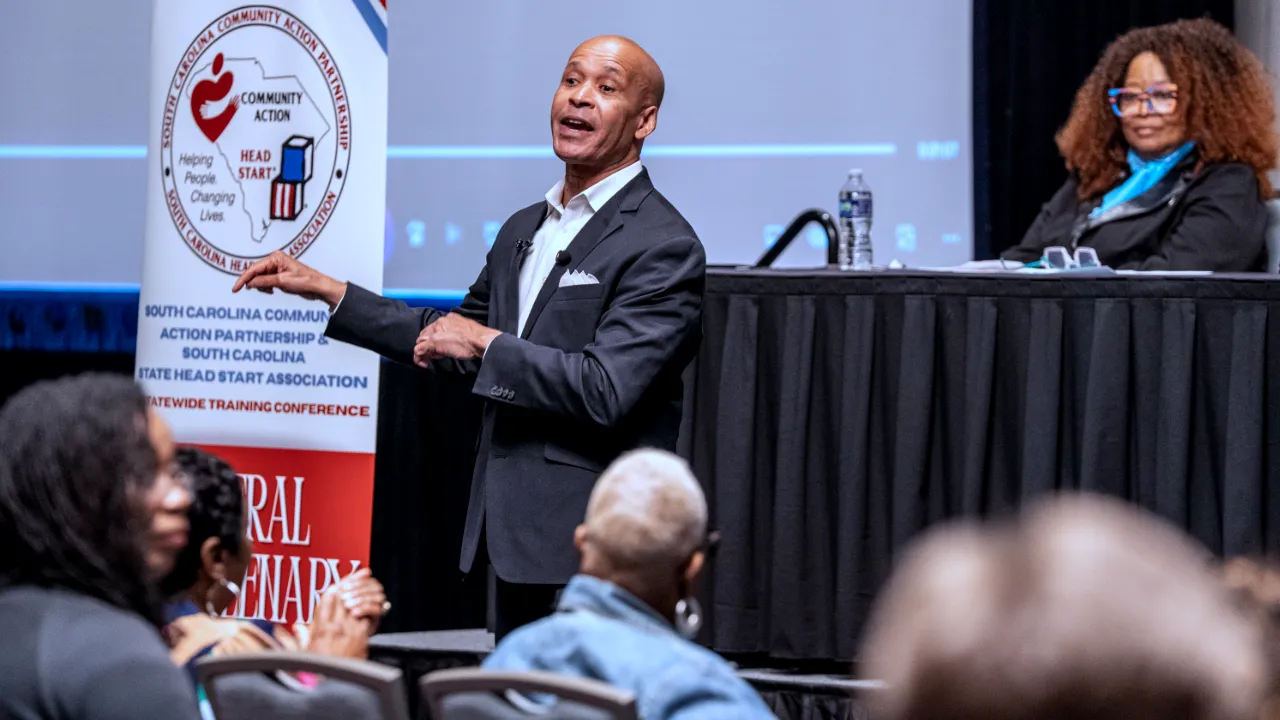
Motivational speaker vs keynote speaker: what is the difference? A motivational speaker lifts your audience. A keynote speaker sets the tone for your whole event and ties the message to its theme. An article on the National Speakers Association's site says that planners hire keynote speakers for the experience, not just the information. Think of music. The keynote speaker hits the right key for the whole event. Some speakers do both. The real question is which one your event needs.
I have been on stages for over twenty years. I have been both. Here is what I learned.
What a motivational speaker does
A motivational speaker uses a personal story to lift people up. The goal is to make the audience feel they can do more. Overcoming a hard moment, climbing a mountain, surviving a loss. People walk out feeling good and ready to go.
That has value. But motivation is like caffeine. You get a shot, and you are good for a couple of hours. Then it wears off.
What a keynote speaker does
A keynote speaker is the main voice of the event. The keynote sets the tone, blends the event theme into the delivery, and gives the audience an actionable takeaway. A good keynote speaker brings expertise, not just a story.
They are there to help solve a problem. The audience should leave knowing something they did not know, or able to do something they could not do before. Simply put, the keynote speaker takes the audience to a place in their mind they've never explored before. Makes them think. That's the part I frankly missed in my early speaking career. It took me many years and trials to know the difference.
Motivational speaker vs keynote speaker: 5 key differences
| Motivational speaker | Keynote speaker | |
|---|---|---|
| Main goal | Lift emotions and energy | Set the tone and deliver the main message |
| Source of authority | Personal story | Expertise, plus a story that supports it |
| Tied to the event theme | Often not | Always |
| What the audience takes home | A feeling | A tool or a plan |
| Best for | Kickoff energy, celebrations | Conferences, leadership events, problem-focused meetings |
Why the market changed
When I first started in this business, motivational speakers were in hot demand. All you needed was a powerful story to hang your shingle. There was not much competition either.
Today it is different. It seems like everyone with a social media account wants to be a motivational speaker. Executives who were let go or retired are jumping in. People who climbed a mountain, people who held political office are doing the same. Even if they were not thinking of a speaking career, speakers bureaus would knock on those doors.
The market is saturated. So much so, those who hire speakers are overwhelmed with their choices. Today, things are very different. In my experience, companies and associations are asking for something beyond just a motivational speech. They no longer want just a motivational speaker. They want someone who can help them solve a real problem. They want substance for their money.
Why I stopped being only a motivational speaker
I decided my days as a motivational speaker are over. Not because the story does not matter any more. It does. But the story should only be a wrapper for the takeaways. We have to give the audience a real, tangible knowledge to fix a problem. That is rare. But that is exactly what meeting or conference planners are looking for. Because the person who is writing the check demands an ROI.
So can a keynote speaker also be motivational? Yes. The best ones are. The story opens the door. The takeaway is what the audience takes with them. Not the feel good.
Motivation wears off. Inspiration stays.
Let me show you the difference between motivation and inspiration.
A purely motivational speech works like that shot of caffeine. The audience feels great in the room. Then they walk to the parking lot, or back to work, or home to face reality. They soon realize the motivation cannot help them solve their problem. They need tools that can help them take action to change their situation.
Inspiration is different. It can last a lifetime. Think of a great movie, a book, a sermon, or a speech with a story that touches your heart and soul. That's inspiration. The Latin root of the word is spiritus, which means breath, life, or spirit.
Inspiration takes you to a place in your mind you have never been before. Something opens up, and a transformation begins. Another way to think about it is that motivation is external and inspiration is internal.
Three years ago, I met a woman at the Atlanta airport. She ran up to me and said, "I saw you speak ten years ago, and you changed my life." Then she told me the story I had shared with her audience, word for word. She remembered it after ten years. Motivation is not why she remembered the story. It's because she was deeply inspired.
Another time, I went to Ohio to deliver a keynote. A bureau had booked me. I did not know who the client was. The bureau does not tell you. They claim it's their client, not yours. So I did not know how the engagement came about.
The president of the association was supposed to introduce me. She stood at the lectern and read the first few lines. After reading the first line, she broke into tears and put the introduction down. She told the audience she wouldn't be able to read the intro. Five years earlier, she had heard me speak at the Opryland hotel in Nashville.
She was at the lowest point of her life. My keynote picked her up. It inspired her. I touched her soul. She said that if she ever became president of the organization, I would be her keynote speaker.
That is what inspiration does. It can last for a lifetime.
But inspiration alone is not enough anymore
Here is where things are different today. It is not enough to be an inspirational speaker. It is not enough to be a motivational speaker either. Inspiration has its place. But a keynote speaker has to solve a particular problem for the audience. When you combine that with the inspiration, the client sees the ROI.
Let's say you help them boost morale during a turbulent change. Productivity goes up by five percent. Depending on the company's revenue, that could mean a big boost in their bottom line. Now, I'm not saying a keynote speaker is going to solve a big problem in a forty five minute talk. But they can start the process.
However, they can change a behavior. They can share one action step that changes something.
In my keynotes, there's something I call the charge. The charge is the one thing I ask the audience to do right after the speech, so the message turns into action.
The story opens the door. The charge is what gets people to walk through it.
Which one does your event need?
Ask yourself these five questions.
- What problem do we need solved?
If you have a real problem, like keeping your best people, you need a keynote with a takeaway for retention. - Is there a theme?
Will the keynote speaker find out the theme of the conference to tie it into his presentation. - What do we want people to do afterward?
If you want action, ask for a tool or a plan, not just a story. - How long will the feeling need to last?
A good feeling lasts a day. A new habit lasts much longer. - Can the speaker do both?
Ask them. Ask for an example of the takeaway they leave behind or what will change as a result of their keynote presentation.
If you are planning a leadership event and want to see how this looks in practice, read about my leadership keynote on retention.
Motivational speaker vs keynote speaker: questions people ask
What is a motivational speaker?
A motivational speaker shares a personal story to lift an audience and spark action. Their authority comes from their experience, not necessarily from expertise in your industry.
Can a keynote speaker also be motivational?
Yes. Many are both. The difference is that a keynote speaker ties the message to your event theme and leaves the audience with something actionable they can use to change their condition.
Are motivational and inspirational the same thing?
No. Motivation fades in a couple of hours. Inspiration can last a lifetime. It is a story that stays with you. It's something that touches your soul.
What is the difference between a keynote speaker and a guest speaker?
The keynote speaker is the main voice of the event. Just like hitting keys on a piano. They hit the right key to set the tone of the event. A guest speaker usually covers a specific topic in a shorter session. They often speak from a lectern or podium. The keynote speaker owns the entire stage. They utilize the left, right, front, back of the stage.
What is another term for keynote speaker?
Featured speaker, main speaker, and headline speaker all mean about the same thing.
Start here
Before you book anyone, write down the one problem you want solved. Then ask every speaker how they would help you solve it.
Let me conclude by saying this. A motivational speaker can light the fire. A keynote speaker helps you keep it burning. The best choice depends on what your event needs.
If you want a keynote that solves a real problem for your team, let's talk.
Much success to you! Press on!



0 Comments