
The night before I was set to deliver a keynote for the Indiana Bankers Association, I walked into that ballroom alone. Man, I wish I had not done that. The room was massive. Round tables everywhere, draped in white linen. A big stage. Spotlights. A podium that looked...
How to Lead Through Change and Uncertainty: The Resilience Blueprint
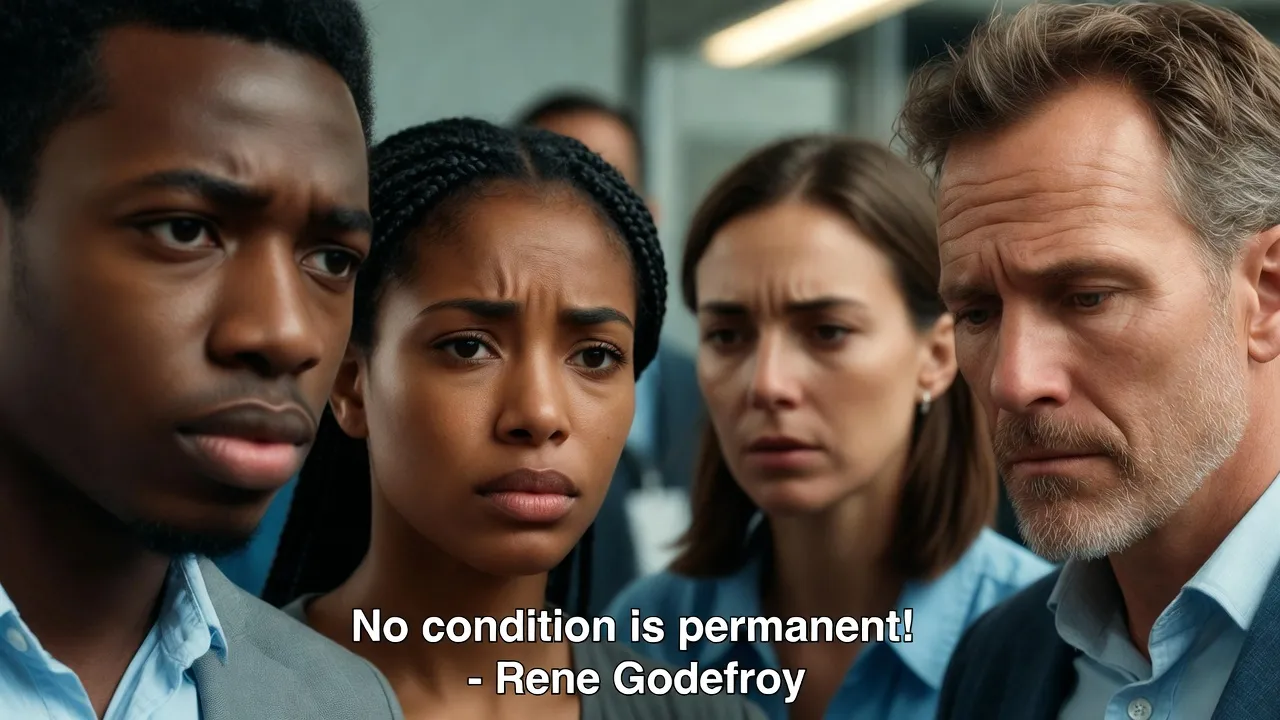
Here’s the truth: learning how to lead through change and uncertainty is one of the hardest challenges any leader faces. It requires resilience and the right mindset. But here’s what most leadership experts won’t tell you: This is not something you can learn from a textbook.
I arrived in America at 21 with $5, two shirts, and zero English. I didn’t know where I’d sleep or how I’d eat. Uncertainty wasn’t a leadership challenge. It was my life.
I washed cars in a Miami parking lot. Most people said no. I kept asking until someone said yes. I worked as a doorman for 14 years, watching the economy crash, watching people lose jobs, watching uncertainty become the only constant.
Today, I speak to Fortune 500 companies about how to lead through change and uncertainty. And here’s what I know for sure: you can’t control change, but you can control how you respond to it.
The Leadership Crisis Nobody Talks About
Right now, 71% of employees feel overwhelmed by workplace change. 32% of leaders admit they’ve felt paralyzed by uncertainty when it was time to act. Another 42% put off making decisions because the discomfort was too much.
I arrived in America at 21 with $5, two shirts, and zero English. I didn’t know where I’d sleep or how I’d eat. Uncertainty wasn’t a leadership challenge. It was my life.
I washed cars in a Miami parking lot. Most people said no. I kept asking until someone said yes. I worked as a doorman for 14 years, watching the economy crash, watching people lose jobs, watching uncertainty become the only constant.
Today, I speak to Fortune 500 companies about how to lead through change and uncertainty. And here’s what I know for sure: you can’t control change, but you can control how you respond to it.
The Leadership Crisis Nobody Talks About
Right now, 71% of employees feel overwhelmed by workplace change. 32% of leaders admit they’ve felt paralyzed by uncertainty when it was time to act. Another 42% put off making decisions because the discomfort was too much.
The difference between leaders who thrive and leaders who freeze?
They’ve learned to see uncertainty as information, not a threat.
This isn’t theory from a business school. This is what kept me moving forward when I had nothing. And it’s what I’ve seen work with teams facing layoffs, mergers, market crashes, and everything in between.
Let’s talk about how to lead through change and uncertainty when the only thing you know for sure is that nothing is sure.
Why Uncertainty Freezes Leaders (And Your Teams)
The Brain’s Threat Response
When uncertainty hits, your brain treats it like a physical threat. It’s the same response you’d have if you saw a rattlesnake on your path.
Fight. Flight. Freeze.
Most leaders freeze. They wait for more information. They delay decisions. They hope things will become clearer.
Here’s the problem: uncertainty rarely gets clearer on its own. It gets clearer when you move through it.
When I was washing cars, I didn’t know if anyone would hire me. But standing still wouldn’t give me answers. Fear wanted me to stop. Resilience said keep moving.
That’s the first truth about leading through uncertainty: motion creates clarity.
The Real Cost of Inaction
You know that 70% of change initiatives fail? Want to know the two biggest reasons?
39% fail because of employee resistance. 33% fail because of inadequate management support.
Translation: Your team is watching to see if you believe in this. If you’re hesitant, they’ll resist. If you’re paralyzed, they’ll panic.
When leaders freeze, teams disengage. Productivity drops. Your best people start looking for the exits.
People don’t need you to have all the answers. They need to see you leading anyway.
What Your Team Is Really Asking
During times of uncertainty, your team isn’t asking, “Do you have all the answers?”
They’re asking three different questions:
Are you steady? Can I count on you not to panic?
Can I trust you? Will you tell me the truth, even when it’s hard?
Will you protect me? Not from change, but through it.
Those are the questions you need to answer. And the answer needs to be yes.
So how do you do that? Here are the five core principles.
The 5 Core Principles for Leading Through Uncertainty
Principle 1: Accept What You Can’t Control (Then Focus on What You Can)
When I couldn’t speak English, I couldn’t control that reality. But I could control showing up every day and trying. I could control my attitude. I could control my effort.
No condition is permanent. But complaining keeps you stuck.
Most leaders waste massive energy trying to control things outside their reach. The economy. Market conditions. Competitors’ moves. Technology disruption.
You can’t control those things. You can control your response.
Here’s what this looks like in practice:
I worked with a team at a Fortune 500 company during a major restructuring. Nobody knew if their department would survive. The leader could have spent every meeting complaining about headquarters. Instead, she said this:
“We can’t control the restructuring decision. Here’s what we can control: the quality of our work, how we support each other, and how we position ourselves as essential.”
That team not only survived the restructuring. They expanded.
Action Step: Make two lists. One for what’s in your control. One for what isn’t. Share both with your team. Then say, “We’re focusing 100% of our energy on column one.”
When you stop fighting what you can’t change, you free up energy to change what you can.
Principle 2: Communicate Truth, Not Comfort
Here’s where most leaders get it wrong. They try to make uncertainty feel comfortable. They soften bad news. They wait until they have “all the information” before saying anything.
The result? Their team doesn’t trust them.
Research shows that 29% of employees say change isn’t communicated clearly. That’s not because leaders are malicious. It’s because they’re trying to protect people from discomfort.
Stop doing that.
Clarity is king. People can handle hard truth. They cannot handle being lied to or kept in the dark.
When I was a doorman, the best managers told us the truth. “Business is slow. We might have to cut hours. Here’s what we’re doing to bring in more customers.” We trusted them.
The managers who said “Everything’s fine” when we could see empty rooms? We stopped believing anything they said.
Your team knows when things are uncertain. Pretending otherwise insults their intelligence.
Here’s the framework I use:
“Here’s what we know: [state the facts]. Here’s what we’re still figuring out: [acknowledge unknowns]. Here’s what we’re doing about it: [share actions].”
Notice what this does. It doesn’t pretend to have all the answers. But it shows you’re not paralyzed.
Action Step: Schedule a team meeting this week. Use the framework above. Be radically honest about what you don’t know. Then tell them what you’re doing anyway.
Transparency builds trust. Trust builds resilience.
Principle 3: Protect Your People’s Emotional Safety First
Here’s the thing most leadership books won’t tell you:
Leadership isn’t about protecting results. It’s about protecting people so they can produce results.
Let me explain what I mean.
73% of employees report moderate to high stress during change. Two thirds experience burnout during organizational transitions. These aren’t just numbers. These are your people.
When someone is stressed, scared, or burned out, they cannot do their best work. It’s not a willpower problem. It’s biology. The brain literally cannot access higher-level thinking when it’s in survival mode.
So if you want your team to perform during uncertainty, your first job is to make them feel safe enough to think clearly.
This doesn’t mean going soft. This doesn’t mean lowering standards.
It means caring about them as people.
When I was an undocumented immigrant, I was afraid every single day. The managers who asked, “Rene, how are you really doing?” got my best work. Not because they went easy on me. Because they saw me as a human being.
Here’s how you create psychological safety:
Check in individually. Not just in team meetings. Actually ask each person, “How are you handling all this?”
Then listen. Really listen. Don’t immediately try to fix it or minimize it.
Be present with their concern. You can acknowledge someone’s fear without agreeing that the fear is rational.
Action Step: Block 15 minutes per person on your calendar this week. Ask them how they’re doing. Listen without defending or explaining. Just hear them.
When people feel seen and heard, they can move forward. When they feel invisible, they shut down.
Principle 4: Paint the Future in 3D
Uncertainty means people can’t see the path forward. They’re walking in fog.
Your job isn’t to eliminate the fog. Your job is to show them where we’re going anyway.
This is about vision. And I don’t mean some vague corporate mission statement. I mean painting a picture so clear that people can see it, smell it, feel it.
When I was broke in Miami, I visualized speaking on stages. I saw the audience. I felt the microphone. I imagined the applause. I made the future so real that the present couldn’t stop me.
That’s what your team needs from you.
Research backs this up. Organizations with clear, compelling vision are 3.5 times more likely to succeed during change. Why? Because vision gives people something to pull toward instead of just pushing away from pain.
Here’s how to do this:
Be specific. Not “We’ll be successful.” But “In six months, we’ll have reduced customer complaints by 40% and our team will be the benchmark other departments study.”
Make it sensory. Not just metrics. Feelings. “We’re going to build a customer experience so good that people tell their friends about us.”
Repeat it constantly. Vision needs reinforcement. Say it in every meeting. Connect every task to it.
Action Step: Write your team’s six-month vision in three sentences. Share it tomorrow. Then reference it in every conversation for the next week.
People need to see the finish line. Even if they can’t see the entire track.
Principle 5: Model Resilience (Even When You’re Scared)
Let me be real with you. You don’t need to be fearless. You need to move despite fear.
I was terrified washing cars. People rejected me all day. I was terrified giving my first speech. My English was broken and I thought people would laugh.
But I kept showing up. Not because I wasn’t afraid. Because I refused to let fear make my decisions.
That’s what your team needs to see.
They don’t need you to be Superman. They need you to be steady. To acknowledge difficulty without being defeated by it.
Leaders who show patience, emotional stability, and resilience during change are the most valuable to their organizations. Not because they never struggle. Because they struggle and keep leading anyway.
Here’s what this looks like:
Acknowledge the difficulty. “This is hard. I know it. You know it. Let’s not pretend otherwise.”
Stay committed. “And we’re moving forward anyway. Here’s our next step.”
Celebrate progress. “Look how far we’ve come. Two months ago, this felt impossible. Now it’s happening.”
Action Step: Share one thing you’re uncertain about with your team. Then share how you’re handling it. Model the behavior you want to see.
Your resilience gives them permission to be resilient too.
Practical Steps to Lead Your Team Through Uncertainty TODAY
You’ve got the principles. Now here’s how to apply them immediately:
Step 1: Assess Your Reality
What’s actually happening versus what you’re afraid might happen? Separate data from drama. Write it down.
Step 2: Identify Your Anchors
What is NOT changing? Your mission? Your values? Your commitment to your team? Ground people in those constants.
Step 3: Over-Communicate
Three times more than feels necessary. Multiple channels. Team meetings, emails, one on ones, casual check-ins. Repeat your message until you’re sick of saying it. Then say it again.
Step 4: Create Quick Wins
Break the big scary uncertainty into small actions. Momentum combats paralysis. “Today we’re going to accomplish this one thing.”
Step 5: Monitor and Adjust
Weekly check-ins: “What’s working? What’s not?” Be willing to pivot. Flexibility is not the same as being wishy washy.
Step 6: Celebrate Resilience
Recognize effort, not just outcomes. “Look at how this team showed up during a tough week.” Make resilience visible.
The Bottom Line: You Don’t Need Certainty to Lead
I didn’t know how I’d succeed when I came to America. I didn’t speak the language. I didn’t have connections. I didn’t have money.
I didn’t have certainty. But I had commitment.
And that’s what your team needs from you right now.
Uncertainty will always be part of leadership. Markets shift. Technology disrupts. Plans change. Unexpected crises hit.
The leaders who thrive aren’t the ones who eliminate uncertainty. They’re the ones who refuse to let uncertainty stop them.
Think about it. When has anything worth doing come with guaranteed success? Never. You got married without certainty. You took your current job without knowing exactly how it would turn out. You had kids without a manual.
You moved forward anyway. Because the alternative was staying stuck.
Your team is watching. Not to see if you have all the answers. But to see if you’ll keep leading when you don’t.
Challenges don’t define us. They refine us.
So here’s my question for you: What’s the uncertainty you’re facing right now? And what’s the one action you can take today, even without knowing how it all turns out?
Start there. Keep moving.
No condition is permanent.
Your Turn
Which of these five principles hits hardest for you right now? Are you struggling with accepting what you can’t control? With communicating hard truths? With creating psychological safety?
Drop a comment and let me know. Because here’s the truth: you’re not the only leader feeling this way. And sometimes just knowing that makes the uncertainty a little easier to navigate.
And if you’re looking for someone to help your team build resilience during change, let’s talk. Because this is what I do. Not from a textbook. From experience.
RENE GODEFROY
Rene Godefroy is an award-winning keynote speaker who has delivered over 2,000 presentations for organizations like Coca-Cola, AT&T, Aflac, and the US Army. He immigrated to the US from Haiti at 21 with five dollars and built a career helping leaders turn adversity into opportunity.


0 Comments